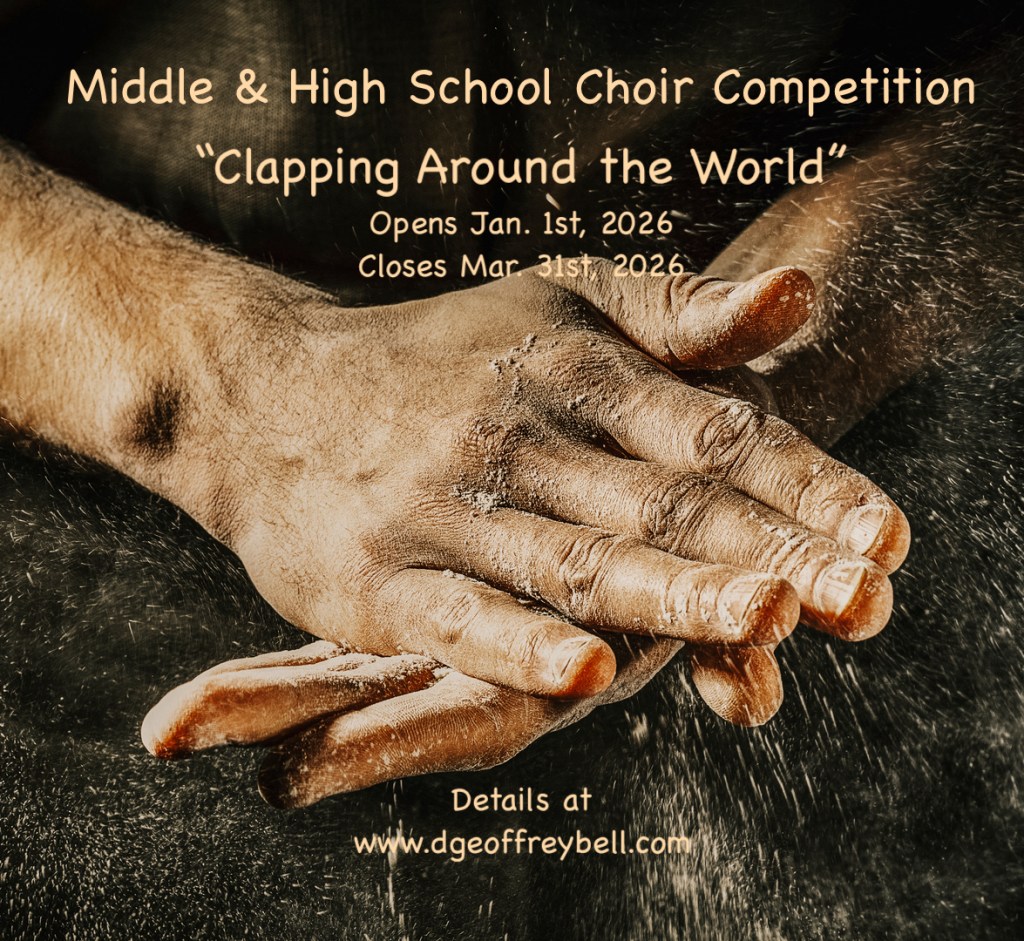
This song developed in a very round-about way. I was enjoying a documentary series about traditional breads from countries around the world. The episode about Guatemala caught my attention because making tortillas is an essential part of daily life! Clapping sounds fill the air every morning. People clap dough back and forth in their hands very quickly, leading to a bit of friendly competition; “How quickly can you clap?”
As I did more research, I discovered that clapping has different uses and significances in many cultures around the world. With close to 200 countries in the world, this song barely begins to scratch the surface. It gives a sneak peek into 5 countries where clapping is a significant part of the culture in some way.
Rehearsal and performance notes
Performers might wonder about the difference between an eighth note clap and a quarter note clap. There is no difference to the sound; they’re written that way just to make the rhythms a bit easier to read.
I recommend practicing the clapping patterns separately and slowly at first, until they feel natural and easy. Then add in the singing. Gradually increase the speed, always aiming for a crisp, accurate sound. If things begin to sound messy, slow them down again until they are solid. Practice sheets are available to make practice at home easier.
Many patterns are repeated throughout the piece, but each verse has a pattern specific to the country or culture you are singing about.
Optional Bass – If you have bass voices, by all means, use them! They can follow the baritone part, and sing the high notes an octave down. If you don’t have bass voices, consider adding any instrument that plays in the bass range: double bass, electric bass guitar, tuba, etc.
Clapping Instructions
Verse 1 – making tortillas in Guatemala and Clap Roti in Trinidad
In mm. 14-15 clap quickly, alternating between right hand on top and left hand on top.
YouTube example: “Authentic Tortillas Handmade in Guatemala” by @ScenicCaptivation https://www.youtube.com/shorts/DNoRxKUJjww
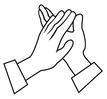

Verse 3 – Keherwah Taal from India (many variations exist; this is one of them)
In mm. 39-46 follow the hand pattern below
YouTube example: “Keherwa Tall part 1 || How to Count || Finger Positions” by @HeeraKulkarni-Yogini https://www.youtube.com/shorts/PNyA4XAwmcg


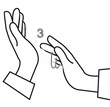
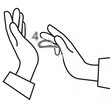
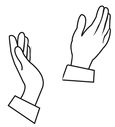


Verse 4 – Omochio Tsukimasho from Japan
Instructions are in the score
YouTube examples:
1. Omochio Tsukimasho | Clapping Game by Marc Keehmer
https://www.youtube.com/watch?v=7TwayiE1JFQ (start at 3:50 to see combined parts)
2. Owens kids doing the Omochio song from Music Teacher Ms. Parkin!
https://youtu.be/vvth66XUgTA?si=5SWHK4pdDk8rfZkH

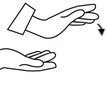

Educational ideas & opportunities
This song offers some interesting learning opportunities for school choir members!
- Students from other cultures could be encouraged to share information about how clapping is significant in their culture. This could lead to writing a new verse to add to the song.
- Students could research how clapping is significant in other countries or cultures.
- Students could search for videos online that teach clapping patterns and clapping games from around the world.
Original clapping icons by Mogilevchik licensed from Dreamtimes.com
Additional icons adapted by D. G. Bell
Original “OK” icons from https://aslgeniushourbytke.weebly.com/numbers.html
Additional icons adapted by D. G. Bell
Music, lyrics and instructions © 2026 D. Geoffrey Bell
 D Geoffrey Bell - Composer of Choral and Instrumental Music